
Last updated: August 3, 2026
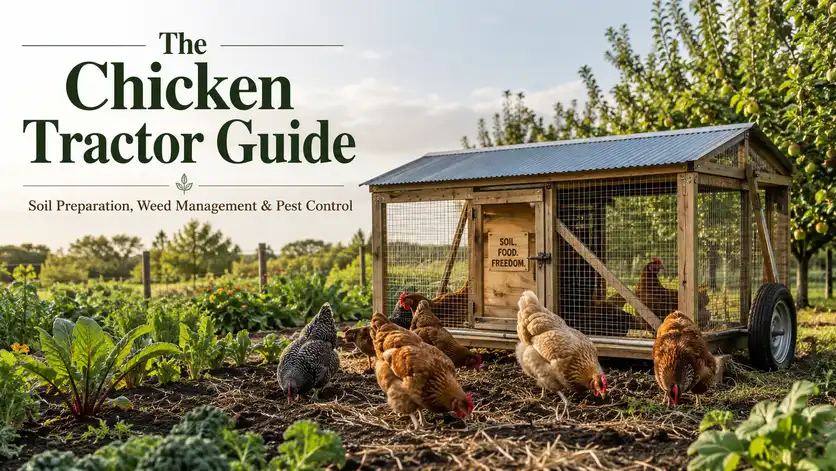
A chicken tractor is a movable, bottomless poultry enclosure that gives chickens controlled access to fresh soil, vegetation and insects. This Chicken Tractor Guide explains how to choose the right size, calculate space per bird, create a practical rotation schedule and use poultry for garden preparation without leaving bare, compacted or manure-heavy ground behind.
A well-managed chicken tractor can reduce weed pressure, clean up crop residues, distribute fertility and give birds regular access to fresh forage. A poorly managed tractor can become a small overcrowded run that damages vegetation, creates odor and exposes the flock to heat, mud or predators. The difference comes down to floor area, bird type, construction weight, rotation timing and careful observation of the ground.
This page focuses on how to size, rotate and use a mobile poultry system. For construction measurements, frame choices, wheel systems, roofing, hardware cloth and predator protection, use our separate DIY Chicken Tractor Plans guide.
Quick Answer: How Big Should a Chicken Tractor Be?
A practical starting point is approximately 1.5–2.5 square feet per broiler, 3–5 square feet per laying hen and 4–6 square feet per bird in a mixed homestead flock. More space is usually needed when the tractor stays in one place longer, vegetation is sparse, the ground is wet or the weather is hot.
Most mobile systems should be moved every 24–48 hours. Move sooner when bare soil, mud, odor, ammonia, excessive manure or stressed vegetation appears before the planned rotation.
Chicken Tractor Size Calculator
Estimate floor area, practical dimensions, rotation coverage, nest boxes and roost length for your flock.
Your Chicken Tractor Results
How this estimate was calculated
What Is a Chicken Tractor?
A chicken tractor is a portable poultry enclosure with an open or partially open floor. The frame normally includes wire mesh, a weather-protected section, handles, skids or wheels, feeding and watering points, and enough structure to resist predators. Because the bottom remains open, chickens can scratch, forage and deposit manure directly on the ground.
The word “tractor” does not mean that chickens plow deeply like farm machinery. Their activity is concentrated near the soil surface. They scratch through mulch and light vegetation, eat seeds and insects, break apart soft crop residues and distribute manure over the area beneath the enclosure.
The enclosure is then moved to fresh ground before the existing patch becomes excessively bare, muddy or manure-heavy. Repeated movement turns natural poultry behavior into a controlled land-management process.
A Chicken Tractor Can Be Used To:
- Give poultry regular access to fresh vegetation and insects.
- Clean up spent vegetable beds after harvest.
- Reduce young annual weeds before they set seed.
- Disturb pest larvae and insects hiding in crop residue.
- Spread manure across several areas instead of concentrating it in one run.
- Prepare future planting areas as part of a wider rotation.
- Manage orchard lanes and fallen fruit with controlled timing.
The system is especially useful on small properties where permanent poultry runs quickly become bare. It also fits naturally into small-space permaculture because the same area can serve different functions throughout the year.
How Much Space Does Each Chicken Need?
Space requirements depend on breed size, age, flock type, weather, time spent inside the tractor and how frequently the enclosure moves. There is no single number that works for every design.
A practical planning value is approximately 1.5 square feet per bird for pastured broilers and at least 3–5 square feet per laying hen. A mobile tractor should be adjusted according to how long birds stay in the enclosure and how quickly the ground recovers.
| Flock Type | Practical Starting Range | Use More Space When |
|---|---|---|
| Pastured broilers | 1.5–2.5 sq ft per bird | Birds are older or heavier, movement is slower, or weather is hot. |
| Laying hens | 3–5 sq ft per bird | The tractor is also the overnight coop or contains feeders, nests and roosts. |
| Mixed or dual-purpose flock | 4–6 sq ft per bird | Bird sizes vary, large breeds are included or the tractor moves every 2–3 days. |
| Bantams | 2–3 sq ft per bird | Vegetation is sparse, the ground is wet or birds spend all day inside. |
Treat these ranges as planning values rather than universal legal minimums. Local rules or welfare standards may require different stocking densities.
Let the Ground Confirm the Calculation
The tractor is too crowded or moving too slowly when the floor becomes bare, muddy, strongly scented or covered with concentrated manure before the next scheduled move. Feather damage, excessive competition, panting and birds crowding the shaded area are also warning signs.
How to Choose Chicken Tractor Dimensions
After calculating the required floor area, choose dimensions that match the site. A tractor that technically provides enough square footage may still be impractical if it cannot pass through gates, align with garden beds or move across uneven terrain.
Match the Width to Your Garden or Pasture
For garden use, the tractor width can match the width of one or two growing beds. A four-foot-wide tractor is easier to move between narrow paths. Six- and eight-foot designs provide more floor area but need wider access routes and stronger frames.
Do Not Build More Weight Than You Can Move
A heavy tractor often becomes a permanent coop because moving it is unpleasant. Use strong but efficient framing, keep unnecessary materials to a minimum and position wheels so that one person can lift or roll the enclosure safely.
The separate Chicken Tractor Plans page covers framing materials, wheels, roof options, hardware cloth and predator protection in detail.
Include Usable Shade, Not Just a Roof
The shaded section must remain usable as the sun changes position. A small roof directly above the enclosure may not shade the floor during early morning or late afternoon. Extend solid roofing or side shade so that every bird can escape direct sun without crowding.
Plan Feeders, Waterers, Nests and Roosts
Equipment reduces usable floor area. A feeder or waterer placed in the middle of a small tractor can create bottlenecks and prevent birds from moving normally. Mount equipment where possible, protect water from direct sun and leave enough clearance to refill it without allowing birds to escape.
For laying hens sleeping in the tractor, provide approximately one nest box for every four to five hens and enough roost length for the flock. The calculator uses nine inches of roost length per bird as a planning value.
How Often Should You Move a Chicken Tractor?
Most homestead chicken tractors should move every 24–48 hours. Daily movement is the safer starting point for garden beds, hot climates, wet soil, heavy stocking or limited vegetation.
Use a 24-Hour Rotation When:
- Bird density is high.
- The enclosure is near the minimum recommended size.
- The ground is wet or soft.
- Temperatures are high.
- Vegetation is short or slow-growing.
- The tractor is operating directly over garden beds.
- Odor or exposed soil develops quickly.
A 48-Hour Rotation May Work When:
- The enclosure provides generous floor area.
- The flock is small relative to the tractor.
- Pasture growth is dense and active.
- The soil is dry, stable and well drained.
- The tractor is used on pasture rather than prepared vegetable beds.
The calendar is only a starting point. A successful tractor pass leaves lightly scratched vegetation, evenly distributed manure and dry footing. An unsuccessful pass leaves bare soil, mud, concentrated manure, odor and stressed birds.
How to Use a Chicken Tractor in a Vegetable Garden
A chicken tractor works best when its movement is planned alongside the crop calendar. Random movement may provide fresh grass for the chickens, but planned movement can also support bed preparation, residue cleanup and pest management.
Before Planting
Use the tractor on a future planting area to remove young vegetation, disturb surface pests and add manure. Move the birds before the soil becomes bare or compacted. Afterward, rake large manure clumps if necessary and apply compost or mulch according to the needs of the bed.
After Harvest
Once crops and supports have been removed, chickens can eat damaged leaves, dropped produce, insects and tender weeds. This can reduce pest habitat and help break down soft crop residue before the next crop or cover-crop cycle.
Before a Cover Crop
A short tractor pass can reduce existing vegetation and lightly disturb the surface. After the birds move, level the bed, sow the cover crop and water as needed. Chickens should not remain long enough to leave compacted or heavily manured ground.
On Garden Paths
Paths can become reservoirs for weeds and insects. A narrow tractor can clean paths before a new layer of mulch is added. Protect drip lines, irrigation fittings and young perennial plants from scratching.
In Orchard Lanes
Chickens can consume fallen fruit and insects while fertilizing the lane between trees. Use guards around young trunks and exposed roots, and keep birds away from damaged irrigation lines.
Chicken Tractors for Soil Preparation and Fertility
Chickens disturb the upper soil surface while searching for seeds, insects and tender vegetation. They can shred soft residues, open light surface crusting and distribute manure. This makes them useful in low-till and small-scale systems where large machinery would be unnecessary.
A chicken tractor does not correct every soil problem. It cannot repair deep compaction, poor drainage, severe erosion, salinity or mineral imbalance by itself. Its strength is controlled surface disturbance and nutrient distribution.
Food-Safety Rule for Fresh Manure
Fresh chicken manure may contain human pathogens and should not be treated like finished compost. For certified organic crop production in the United States, raw manure must generally be incorporated at least 120 days before harvest when the edible portion of a crop contacts the soil, or at least 90 days before harvest for other food crops.
Home-garden and local requirements may differ, but a short two- or three-week pause is not a substitute for a food-safety interval. Plan chicken access well before harvesting edible crops, follow local agricultural guidance and use properly managed compost where a shorter planting schedule is necessary.
A Safer Bed-Preparation Sequence
- Choose a bed that is not holding an active edible crop.
- Remove stakes, plastic, wire and materials the chickens could ingest.
- Allow a controlled tractor pass while monitoring ground condition.
- Move the tractor before the bed becomes bare, muddy or manure-heavy.
- Remove or spread concentrated manure deposits.
- Record the date of raw manure deposition.
- Apply the appropriate food-safety interval before harvest.
- Add finished compost, mulch or a cover crop according to the rotation plan.
Chicken tractors often fit best before non-food cover crops, orchard lanes, long-season crops or beds that will remain out of production long enough to meet the required interval.
Chicken Tractors for Weed and Pest Management
Young Annual Weeds
Chickens are most effective against soft, young growth. They eat tender leaves, scratch out shallow seedlings and consume some seeds on the soil surface. Move the tractor through an area before weeds mature and set seed.
One pass will not eliminate deep-rooted perennial weeds such as bindweed, dock or thistle. Combine poultry rotation with mulching, cover cropping, cutting and manual root removal.
Insects and Larvae
Chickens naturally search leaf litter, mulch and crop debris for beetles, larvae, grasshoppers, slugs and other small organisms. Their activity may help interrupt some pest cycles, especially after harvest or beneath orchard trees.
A chicken tractor is not a complete pest-control program. It will not distinguish between harmful pests and beneficial organisms, and it cannot correct disease problems caused by poor crop rotation, infected planting material or unsuitable growing conditions.
Best Timing
Use chickens when no vulnerable crop is present: before planting, after harvest, before cover cropping or in protected orchard lanes. Avoid releasing them into active beds containing seedlings, leafy greens, ripening fruit or exposed irrigation systems.
Example Chicken Tractor Rotation Schedule
The correct schedule depends on climate, land area, vegetation growth and flock size. The following four-week example shows how one small homestead might distribute chicken activity across several zones.
| Week | Target Area | Main Goal | Management Check |
|---|---|---|---|
| Week 1 | Spent vegetable beds | Remove residues and disturb surface pests. | Record raw-manure date before planning the next edible crop. |
| Week 2 | Future cover-crop area | Reduce young weeds and lightly disturb the surface. | Move before the ground becomes bare; sow promptly afterward. |
| Week 3 | Garden paths | Reduce weeds before applying fresh mulch. | Protect edging, hoses and irrigation fittings. |
| Week 4 | Orchard lane or pasture | Clean fallen fruit and give garden soil time to recover. | Protect trunks, roots and low branches. |
Divide larger areas into numbered zones and record the move date for each zone. A simple map prevents the tractor from returning too quickly to recently used ground.
When estimating the total property area needed for food, poultry and crop rotations, our self-sufficiency land guide provides a broader planning framework.
Chicken Tractor vs Fixed Chicken Coop
| Feature | Chicken Tractor | Fixed Coop and Run |
|---|---|---|
| Ground access | Regular access to fresh areas when moved correctly. | Repeated use of the same run unless birds are separately rotated. |
| Manure distribution | Spread across multiple zones. | Concentrated in the coop and permanent run. |
| Mobility | Must remain light enough and strong enough to move safely. | Permanent structure with no daily moving requirement. |
| Weather protection | Limited by mobile design and roof area. | Can provide stronger insulation and larger protected space. |
| Predator protection | Requires secure mesh, closures and ground-edge design at every location. | Can use permanent foundations, buried barriers and heavier materials. |
| Best use | Rotational grazing, garden cleanup and distributed fertility. | Reliable overnight housing, severe weather protection and permanent infrastructure. |
A chicken tractor does not always need to replace a permanent coop. Many homesteads use both: a secure fixed shelter for nighttime and extreme weather, plus a mobile daytime enclosure for controlled access to fresh ground.
Common Chicken Tractor Mistakes
Leaving the Tractor in One Place Too Long
This is the most common management failure. Once vegetation disappears, chickens begin working bare soil and manure accumulates rapidly. Move earlier rather than waiting for visible damage.
Building a Tractor That Is Too Heavy
Heavy lumber, oversized roofing and poorly positioned wheels can make routine movement unrealistic. A tractor that cannot be moved consistently no longer functions as a rotational system.
Using Weak Mesh
Standard chicken wire is designed mainly to contain chickens, not necessarily to stop determined predators. Use stronger welded hardware cloth where predator pressure is significant, secure every door and inspect the perimeter after each move.
Ignoring Shade and Ventilation
Mobility does not protect birds from heat. Every bird must be able to enter a shaded, ventilated area without crowding. Metal roofing should be arranged so that radiant heat does not turn the sheltered section into an oven.
Overcrowding
Too many birds create competition, feather damage, rapid vegetation loss, odor and wet litter conditions. Increase floor area, reduce flock size or move more frequently.
Placing Water on Uneven Ground
A tilted waterer may leak, leaving wet soil and thirsty birds. Level the water station after every move and carry enough reserve water for hot days.
Planting Food Crops Too Soon
Fresh manure is not finished compost. Record when chickens used each bed and apply an appropriate pre-harvest food-safety interval rather than relying only on a short visual rest period.
Moving Without Checking for Birds
Before pulling or lifting the tractor, make sure no bird is trapped against the rear frame, wheels or skids. Move slowly and give the flock time to walk forward.
Chicken Tractor Planning Checklist
- Calculate floor area for the maximum flock size.
- Choose dimensions that fit gates, paths and garden beds.
- Confirm that one person can move the finished structure safely.
- Provide enough shade for the entire flock.
- Design continuous cross-ventilation.
- Use predator-resistant mesh and secure closures.
- Provide dry, stable feeder and waterer positions.
- Add nests and roosts when birds sleep in the tractor.
- Plan a fresh-water refill route before each move.
- Create numbered rotation zones.
- Record the date chickens occupy food-growing areas.
- Apply appropriate manure-to-harvest safety intervals.
- Move early when vegetation, odor or footing begins to deteriorate.
- Inspect the frame, wheels, skids, mesh and latches regularly.
- Maintain a secure backup shelter for severe weather or emergencies.
Chicken Tractor FAQ
How often should you move a chicken tractor?
Most chicken tractors should be moved every 24–48 hours. Daily movement is preferable when the flock is densely stocked, the weather is hot, the soil is wet or the tractor is operating directly over garden beds.
How many chickens can you keep in a chicken tractor?
Capacity depends on the tractor’s usable floor area and the type of bird. A practical starting point is 1.5–2.5 square feet per broiler, 3–5 square feet per laying hen and 4–6 square feet per bird in a mixed flock. Use the calculator above for a site-adjusted estimate.
What is the best size for a chicken tractor?
The best size is large enough for the flock but still light enough to move on schedule. It must also fit through gates and align with the garden beds or pasture strips where it will operate.
Can a chicken tractor replace a permanent coop?
It can when the design provides secure overnight protection, nests, roosts, ventilation and shelter from local weather. In areas with severe winters, intense heat or heavy predator pressure, a fixed overnight coop plus a mobile daytime tractor may be more practical.
Does a chicken tractor need a floor?
The main grazing area normally has an open bottom so chickens can contact the soil. A small solid or mesh-supported sheltered section may be included depending on the design, but the birds must have safe, comfortable footing.
Can a chicken tractor be used directly on vegetable beds?
It can be used before planting or after harvest. Do not place chickens over active beds containing vulnerable crops, and allow an appropriate food-safety interval between raw manure deposition and harvesting edible produce.
How long should soil rest after chickens?
The appropriate interval depends on what will be grown and when it will be harvested. U.S. organic production rules generally use a 120-day interval for crops whose edible portion contacts the soil and 90 days for other food crops when raw manure is incorporated. Local and non-certified garden guidance may differ.
Will chickens remove all weeds?
No. Chickens can reduce young annual weeds and consume some surface seeds, but established perennial weeds often regrow. Combine poultry rotation with mulching, cover crops and targeted manual removal.
Do chicken tractors help control garden pests?
Chickens eat many insects and larvae found in vegetation and crop residues. They may reduce some pest pressure, but they also consume beneficial organisms and should be one part of a wider pest-management strategy.
What should be placed inside a chicken tractor?
Every tractor needs clean water, suitable feed, reliable shade, ventilation and predator protection. Overnight laying-hen systems also need nests and roosts. Equipment should be positioned so that it does not block movement or reduce usable floor space excessively.
Can you leave a chicken tractor in one place for a week?
Usually not unless the enclosure is unusually large and stocking density is very low. A week in one place commonly causes bare ground, concentrated manure and odor. Inspect the surface daily and move according to actual conditions.
How do you know when a chicken tractor should be moved?
Move when vegetation is becoming thin, manure is accumulating, footing is wet, odor develops or birds have already scratched most of the available surface. It is better to move slightly early than to wait until the ground is damaged.
Final Notes
A chicken tractor is most effective when it is treated as a rotation system rather than simply a portable cage. Correct sizing gives birds enough usable room. Frequent movement protects vegetation and distributes fertility. Planned timing connects poultry activity with garden cleanup, cover crops, orchards and future planting areas.
Start with the calculator, then adjust the result for breed size, terrain, local climate and the amount of time birds spend inside. After construction, let bird behavior and soil condition guide the final rotation schedule.
For exact framing dimensions, roof designs, wheels, hardware cloth and predator-resistant construction, continue with the DIY Chicken Tractor Plans guide.
Technical and Food-Safety Sources
How often should you move a chicken tractor?
For most homestead and garden systems, move the chicken tractor every 24–48 hours. Use 24-hour moves when the stocking density is high, the soil is moist, the weather is warm or the vegetation is sparse. Use 48-hour moves only when forage is abundant and there is no ammonia smell, mud or bare soil damage.
How many chickens can you keep in a chicken tractor?
For short daily rotations, plan around 2–4 square feet per bird. Laying hens usually need more space than broilers, especially in hot weather or slower rotation systems. A slightly larger tractor that is easy to move is better than an overcrowded tractor that damages soil and stresses birds.
Can a chicken tractor replace a chicken coop?
A chicken tractor can replace a fixed outdoor run in some systems, but it should still provide strong predator protection, shade, ventilation and access to food and water. In high-predator areas, many homesteads use a fixed night coop together with a daytime chicken tractor.
Is a chicken tractor good for vegetable gardens?
Yes, a chicken tractor can prepare vegetable beds by reducing weeds, exposing pests, shredding residues and adding manure. However, you should not plant immediately after a tractor pass. Most vegetable beds need a 2–3 week rest period before planting, and sensitive direct-seeded crops may need 3–4 weeks.
What is the best size for a chicken tractor?
For small gardens, a 4 × 6 ft or 4 × 8 ft chicken tractor is practical because it fits common bed systems and can still be moved by hand. Larger pasture systems may use 6 × 8 ft, 8 × 8 ft or modular wheeled designs.
1 thought on “The Chicken Tractor Guide: How to Use Poultry for Soil Preparation and Pest Control”