
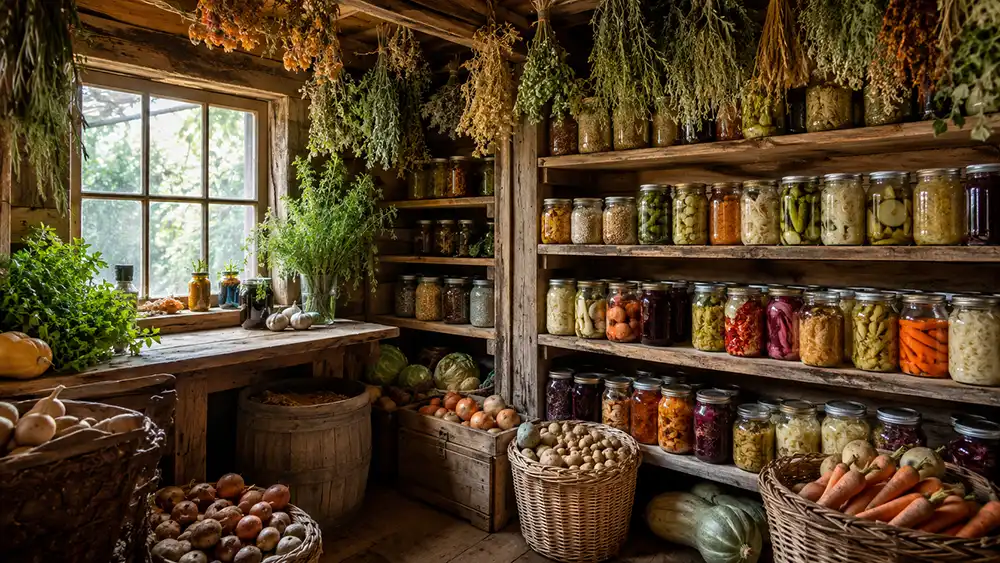
Fermenting vegetables without electricity is one of the oldest and simplest ways to preserve a harvest. All you need is vegetables, salt, a clean container and a cool spot. Beneficial bacteria turn natural sugars into lactic acid, which keeps the food safe, tangy and rich in flavor for months, with no freezer, no canner and no power.
This guide explains how to start fermenting vegetables without electricity: the right salt ratios, which containers to use, how to keep vegetables under the brine, ideal temperatures, how long to ferment, how to store the finished food, and how to spot spoilage. The advice follows established food safety guidance from university extension services.
Quick answer: fermenting vegetables without electricity
- Wash vegetables and chop or shred them.
- Mix with salt: about 2 percent of the vegetable weight for shredded vegetables like cabbage, or cover whole and chunked vegetables in a 3.5 to 5 percent brine.
- Pack tightly into a clean jar or crock so the vegetables are fully below the liquid.
- Weigh them down and cover loosely to let gas escape.
- Ferment at 65 to 75 degrees Fahrenheit (18 to 24 degrees Celsius) for several days to weeks.
- Taste, then move to a cool place to slow fermentation.
Fermentation salt calculator
Always weigh salt: a teaspoon weighs anywhere from 4 to 7 g depending on the type. Use salt without iodine or anti-caking agents.
Salt ratios for fermenting vegetables without electricity
Salt keeps harmful bacteria in check while lactic acid bacteria, which tolerate salt, take over. Too little salt risks spoilage. Too much slows fermentation and tastes harsh. Use plain salt without anti-caking agents or iodine, such as canning salt or sea salt.
| Style | Salt amount | Example (1 kg or 1 liter) |
|---|---|---|
| Shredded vegetables (sauerkraut, kimchi) | 2 percent by weight of vegetables | 20 g salt per 1 kg cabbage |
| Brined whole or sliced vegetables (carrots, beans, cucumbers) | 3.5 percent brine | 35 g salt per 1 liter water |
| Warm climate or long storage | Up to 5 percent brine | 50 g salt per 1 liter water |
Weigh the salt with a kitchen scale for accuracy. A teaspoon varies widely by salt type. For a first batch, use 2 percent for cabbage and a 3.5 percent brine for everything else.
Worked example: one quart jar of sauerkraut
Shred 900 g of cabbage. Multiply by 0.02 to get 18 g of salt. Massage the salt into the cabbage for 5 to 10 minutes until it releases liquid. Pack firmly into a clean quart jar, leaving 1 inch of headspace. The liquid should rise above the cabbage. Weigh it down, cover loosely, and ferment for 1 to 4 weeks at room temperature away from direct sun.
Containers for fermenting vegetables without electricity
- Glass mason jars: cheap and easy to monitor. Use a fermentation weight or a small zip bag filled with brine to hold vegetables down.
- Ceramic crocks: great for large batches. A water-seal crock lets gas escape and keeps air out.
- Food-grade plastic buckets: acceptable for large batches if labeled food-safe.
- Avoid metal containers such as aluminum or galvanized steel, which can react with acid and salt.
Temperature and timing
| Temperature | Result |
|---|---|
| Below 60 degrees F (15 C) | Very slow, may take months, good for long storage |
| 65 to 75 degrees F (18 to 24 C) | Ideal range, ready in 1 to 4 weeks |
| Above 80 degrees F (27 C) | Fast but risks soft texture and off flavors |
Without refrigeration, store finished ferments in a cool root cellar or cold pantry. A properly built root cellar keeps vegetables near 40 to 55 degrees Fahrenheit. See our guide on how to build a root cellar.
Keeping vegetables under the brine
The most common problem when fermenting vegetables without electricity is vegetables floating above the liquid, where mold can grow. Use a weight, a cabbage leaf, or a clean stone. Check daily during the first week and press down any floating pieces.
Signs of success and spoilage
- Good signs: bubbles, a pleasant sour smell, cloudy brine and a firm texture.
- White film (kahm yeast) on the surface is harmless but can be skimmed off.
- Discard if you see fuzzy or colored mold on the food, a slimy texture, or a rotten or putrid smell.
- If in doubt, throw it out. Fermentation is safe when done correctly, but do not take chances with spoiled food.
General food safety information only. If you have a medical condition or a weakened immune system, follow the advice of your doctor and your local food safety authority. For shelf-stable canning, never replace tested procedures with fermentation guesses, and read our pressure canning safety guide.
Related guides
- Food Preservation Without Electricity
- Pressure Canning Safety Guide
- How to Build a Root Cellar
- DIY Solar Food Dehydrator
Frequently Asked Questions
Can I ferment vegetables without refrigeration?
Yes. Fermenting vegetables without electricity works at room temperature, and you then store the finished vegetables in a cool, dark place such as a root cellar. Cooler storage slows the fermentation and keeps texture crisp.
How much salt do I need to ferment vegetables?
Use about 2 percent salt by weight for shredded vegetables and a 3.5 to 5 percent brine for whole or sliced vegetables.
How do I know fermentation is finished?
Taste after a week. When the vegetables are as sour as you like and bubbling slows, move them to a cool place. Many batches are ready in 1 to 4 weeks.
Is white film on top of a ferment dangerous?
A flat white film is usually harmless kahm yeast. Fuzzy, raised or colored growth is mold, and the batch should be discarded.
Sources and further reading
- National Center for Home Food Preservation: Sauerkraut
- University of Minnesota Extension: Fermenting food
- FDA: Safe food handling
Fermenting vegetables without electricity takes just salt, patience and a clean jar. Measure salt by weight, keep everything below the brine, ferment at a moderate temperature, store in a cool place, and you will enjoy flavorful, long-lasting vegetables all winter.